Dollar-Cost Averaging (Rupee-Cost Averaging) Explained
Investing a fixed amount regularly smooths out market ups and downs. Here’s how rupee-cost averaging works.
On this page
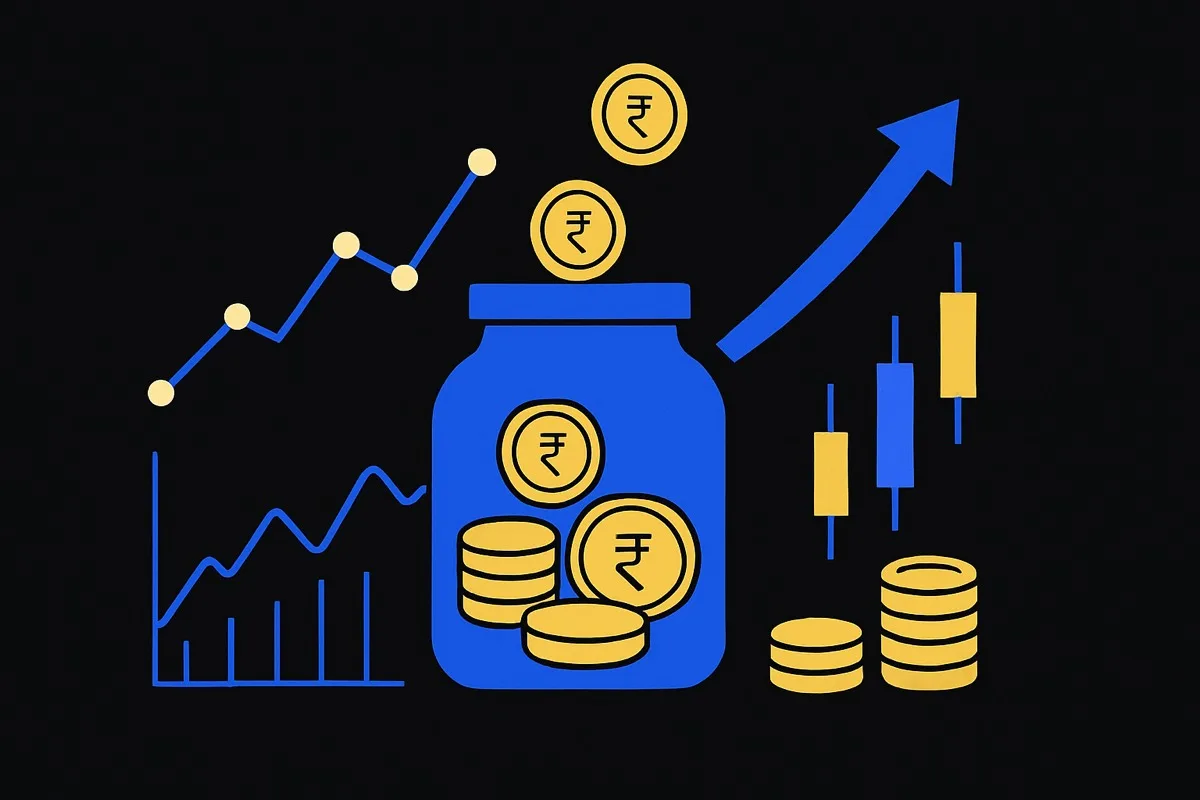
Dollar-cost averaging — called rupee-cost averaging in India — means investing a fixed amount at regular intervals, regardless of price. It’s the engine behind every SIP.
How it works
Because you invest a fixed sum each month, you automatically buy more units when prices are low and fewer when prices are high. Over time, this averages your purchase cost and removes the pressure to “time” the market.
Why it helps
- It takes emotion out of investing — you invest on schedule, not on a hunch.
- It turns volatility into an advantage, buying cheaper units in down months.
- It builds a consistent saving habit.
What to keep in mind
Rupee-cost averaging reduces timing risk, but it doesn’t guarantee a profit — the investment is still market-linked. Over very long horizons with a lump sum of idle cash, investing early has sometimes beaten spreading it out; many investors combine a lump sum (via an STP) with ongoing SIPs.
Use the SIP calculator to see how regular investing could grow over time.